


It’s 2011. I’m sitting on the edge of the bed. I’m trying to figure out how to pay the rent for my small, dim apartment in Washington Heights. I have two weeks to come up with it. I have no prospects. I’m sixty-six years old. Sitting there, I think that after thirty-five years living in New York City, I should be in a better position than this. I shouldn’t be sitting on the edge of the bed in a dark apartment on Pinehurst Avenue in the northern reaches of Manhattan trying to figure out how to pay the rent.
But here I am.
When I was a young man, I had the energy and resolve to deal with these sorts of situations. I always found a way. But after decades living here, New York has consumed that energy and resolve like a ravenous beast, always demanding more. At sixty-six, I am out of fuel. I’m tired. I’ve never been sixty-six before. I am now, and I feel it. What am I going to do? I have no steady job. I have no savings.
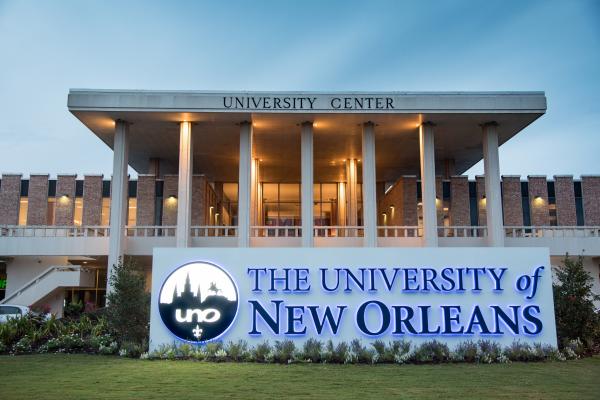
From time to time through the years, I applied for jobs teaching writing at various colleges and universities. This would be a way to rescue myself, at least temporarily, from the capricious life of a freelance writer. I’ve been doing this for longer than I care to remember. I have a Master of Fine Arts in creative writing, wrote four books that have been published, and have experience teaching at the college level as an adjunct. The competition for those steady jobs is severe, however, especially in the northeast. I’ve always been rejected. I never put my age on my job applications, but any recruiter can tell by looking at my CV about how old I am; my first entries are from the 1970s. Who would hire a man in his mid-sixties? The most recent job I applied for was a one-year visiting position at the University of New Orleans. After a short time, like all the others, hearing nothing from them, I forgot about it.
I came to New York City in 1975 when I was thirty years old. I fell in love with the city. New York gave my life brightness and possibility. I walked its streets as a young man week after week, mile after mile, until it became part of me. Its cityscape is now embedded in me. There were times when I wanted to leave—I did, in fact, for a year—times when I cursed it to its face. But, for the most part, I loved it with a passion. I still do.
I got married in New York. My daughter was born in New York. I wrote my first book in New York. I got divorced in New York. So many moments flash before my eyes, both stirring and sad. As E.B. White writes about the city in Here Is New York, “It can destroy an individual, or it can fulfill him, depending a good deal on luck. No one should come to New York unless he is willing to be lucky.” I was willing to be lucky.
The truth is, New York runs through my veins. I have blood type NY. I’ve absorbed ethnicities, taken them in by osmosis, by association—by listening, by bathing myself in its languages, cultures, humor and rituals. I’ve become part Jewish, part Irish, part Italian, part Puerto Rican, part Dominican, part Russian, part Polish. I rise to defend the city when someone maligns it. Like a parent, I feel free to criticize it, and like a parent, I bristle when someone else does.
But, after thirty-five years living here, I’m tired. You have to be able to spring back to live successfully and contentedly in New York. Otherwise, you won’t be able to sustain its many aggressions, insults and setbacks. They’re constant, these slings and arrows. I feel I’m less and less able to stand up to the city’s assaults.
Thirty-five years is a long time to live in New York. At one point, a year or so ago, I even stopped riding the subway. I couldn’t go down those stairs one more time, hear that blast and screech of noise, get into that overcrowded car, jostle against strangers. Instead, I walked or took the bus, or even, at times, splurged on a taxi. How can you live in New York City without taking the subway, especially if you don’t have money? That should have told me something. I guess it did. Not to mention, I didn’t know what I was going to do with the rest of my life.
I didn’t leave. Probably because I had no alternative. Instead, here I am, sitting on the edge of my bed in a dark apartment in Washington Heights, broke, tired and worried.
Lo and behold, I got a phone call. A man gave me his name that I instantly forgot. He said, “I’m the Chair of the English Department at the University of New Orleans.” I racked my brain. The University of New Orleans? What? Why?
“I’ve been looking at your application,” he said. “I’d be interested in talking to you. I’d like to include some colleagues on a call.”
Did I apply for a job at the University of New Orleans? Wait—yes, I guess I did. I must have. I thought, what job was it? I immediately went to my computer to find the job description. I at least wanted to know what I was being interviewed for when we talked.
So it was that few days later I was on the telephone with three English professors who were more than a thousand miles away. They asked me questions I no longer remember. Their voices sounded like I was hearing them underwater. I did show enthusiasm, though. Even humor. They seemed to like what I said, but who really knew?
I went back to worrying about the rent that I hadn’t come up with yet. I called all my writer friends for possible jobs, but they had nothing. Would I have to call my sister again to ask for money? I’d done that more than once when I was on the precipice. She was always lovely about it, but I felt like a failure when I went to her, hat in hand.
A week later, the Chair called me and offered me the job. I would begin teaching in New Orleans in mid-August, just a month away if I accepted. I was being offered a teaching job at a university at age sixty-six! I told him, yes, without pause, worried he might change his mind. I had enough clarity to realize that however this played out, at least I would be freed from sitting on the edge of my bed, worried sick about how to pay the rent. I had one month to pack my bags, move from New York to New Orleans, find a place to live and prepare to teach.
I started to make the mental and emotional adjustment: I would be leaving New York. Leaving the city I loved where I’d made a home for nearly half my life. Leaving a place that had given me so much. I’d never really thought about doing that. I’d resigned myself to living out my life in New York, come what may. But I’d said yes to this job, and so I was going to leave.
The day arrived. My car was packed to the hilt. It was early morning. I got in my car and drove from my uptown apartment to West End Avenue where I would say goodbye to my daughter; she was staying with my ex-wife. I made my way down New York streets, knowing I’d be leaving them for God knows how long.
As I drove in the early morning, I was wretched inside. I was so attached to this place, and I was leaving it. Now that it was happening, I balked and wanted to turn around. I felt like I was betraying a spirit that had been so welcoming to me, so helpful and generous, that had nurtured me and encouraged me. That had given me so many indelible experiences. That had let me become me. I drove by buildings I knew well, by familiar landmarks, stores, subway stops. My heart came to my throat. This place had been my anchor.
I reached West End and 103rd Street and stopped in front of my ex-wife’s building and called my daughter and told her I was there. She came outside to send me off. I got out of the car and hugged her.
“I don’t think you could squeeze a toothpick in there,” my daughter said, peering at the overstuffed contents of books, clothes on hangers, suitcases, duffle bags and boxes.
I told my daughter goodbye, my body shaking. I got back in the car and started to drive away. I could see from my driver’s side mirror my daughter waving. I waved back
I headed south, looking for the entrance, at 96th Street, for the West Side Highway. It would lead me to the George Washington Bridge where I would find the New Jersey Turnpike and point my car south for the twenty-hour drive to New Orleans.
***
Richard Goodman is the author of French Dirt: The Story of a Garden in the South of France and A New York Memoir. You can read his newsletter at richardgoodman.substack.com
Sometimes I feel like half of human civilization has at most one degree of separation from someone or something on that slope of West End Avenue that starts at 96th street and goes up to about 106th.
Alexander Stille’s book “The Force of Things” comes to mind.
I never thought of that, but now that you mention it. Don’t know that book, but I will check it out.
This story touched me beyond description. How are you doing? I am 58 live in Morningside heights, am a poet, musician, writer, now in the same situation, broke and am preparing to head to New Orleans. How I found your post is like a strange miracle. I hope things are going great, all the best Lee.
Lee,
Just saw your comment. New York can be hard at a certain age with very limited means. I felt rejuvenated in New Orleans, and I hope the same goes for you! I’m glad you liked my piece.
Best,
Richard