


In the fall of 1984, three months after turning 21, I started working at the midtown coffee shop, Miss Brooks, that was located on the corner of 56th Street and 6th Avenue. As with most New York City restaurant jobs, many of my co-workers were there only temporarily as they prepared for other careers. While I wanted to be a magazine/music journalist, there were a few dancers, a Brando loving method actor, and a woman getting her degree in hotel management.
There was also a young Detroit native named Krystal Kelly, a recent graduate of Wayne State University, who had come to the big town simply because she’d always dreamed of living in Manhattan. A full-figured light-skinned Goth (though not every day), she had long straight hair and dressed in black. Krystal had studied business and finance at college, but she also had literary aspirations. From the moment she introduced herself, I fell in love with her name; Krystal Kelly sounded like the moniker of a 1940s movie star or a Harlem femme fatale from a Chester Himes crime novel.
Krystal and I quickly became friends. After a few days of working together, she invited me to her place on 97th and Columbus Avenue. Krystal was renting a room from a middle-aged Black woman, a friend of her father; a classy lady who was on another level than the bohemians Krystal and I imagined ourselves to be.
For the next few hours, we sat in Krystal’s carpeted bedroom getting slouched on Old Grand Dad bourbon, smoking cigarettes, listening to music and talking about the world. One minute she was telling me about wanting to write a novel, while the next she was saying some silly shit, sounding like the drunk lead character in Fish Tales, a wild novel about a Detroit party girl written by Nettie Jones. Our soundtrack ranged from Billie Holiday to The Cure, Dinah Washington to The Smiths, Etta James to Echo and the Bunnymen.
As a longtime book junkie, I also spent time looking at the paperback covers and reading the blurbs. Krystal’s shelves had enough Burroughs, Camus and Didion (the books were in alphabetical order) to convince me that she wasn’t a poser. Before Krystal, I hadn’t met a Black woman who was into the Beats and existentialist literature. When the bottle was empty, I suggested we stagger downstairs where there was a jazz club called Mikell’s.
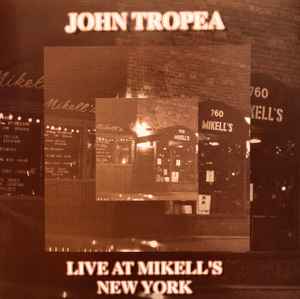
Besides the music, I’d read that James Baldwin’s brother David was a bartender there and that his literary superstar bro would hold court at the club when he was in town; other writers including Toni Morrison, Maya Angelou and Amiri Baraka also hung out at the spot. I had heard about the joint from my saxophone playing friend Vincent Henry, who at the time was a member of the post-disco group Change. But by the time Krystal and I got there, Mikell’s was closed.
While we were attracted to one another, nothing happened between us that drunken night, or any night. Still, Krystal felt comfortable enough to share a few sordid sex stories, including her affair with an Indian actor who also worked at Miss Brooks and had a skinny blonde girlfriend. Ever since high school, I’d been that guy that women shared their troubles with—be it issues with parents, jobs or boyfriends. “You’re like a straight gay friend,” Krystal blurted one night. Though the statement took me by surprise, we both laughed.
Krystal certainly had her share of admirers, including an older man named Arie, who hung with a crew of painters, poets and art critics. He was usually reading and chain smoking Gauloises cigarettes. Sometimes he came into the coffeeshop solo to read, gulp endless cups of coffee and get ashes everywhere. Arie had asked Krystal out a few times, but she declined each offer. She liked him as a friend, and sometimes talked to him about art and books, but later confessed that she thought he was creepy.
“He’s more than forty years older than me,” she exclaimed and laughed. One day while I was walking through the dining room refilling coffee cups, Arie invited me to sit with him. “I always see you reading when you’re on your break,” he said. “Are you in school?”
“Naw, I dropped out of college. I just like to read… a lot.”
“Do you write too?”
“I do, but I’ve only published a few small things; mostly magazine articles and one short story.” Not very comfortable talking about my tiny contributions to the world of literature, I changed the subject. “I see you writing in your notebook, are you working on something?”
He laughed. “The New York City Adventures of a Jewish Intellectual.”
“Is that the title of your novel?”
“I have no idea what it is or if that’s the title; I’m just scribbling for now. We’ll see what happens.” As I was about to stand, he cleared his throat. “Let me ask you a question. I see you and Krystal together sometimes. Are you two dating?”
“No, we’re just friends, but she does have a boyfriend.” I thought the lie would slow him down, but I was wrong.
“Do you think you could put in a good word for me.”
“I’ll see, but don’t get your hopes up.”
After that day, Arie and I became friends; he even invited me over for pasta dinner one night. While eating he asked me about my influences. When I mentioned Samuel R. Delany, he smiled. “He and I went to Bronx Science together. We both wrote for the literary magazine, “ he said. In his book cluttered flat he somehow found the magazine, Dynamo; Delany’s first published story “Salt” was in the 1960 issue.
***
A few months later Krystal got a new job working with foreign exchange students at NYU. She also moved to 47th Street between 9th and 10th Avenue. Sharing the apartment with her dancer friend William, who was also from Detroit, their building was in the neighborhood known as Hell’s Kitchen. All I knew about that hood was it was where comic superhero Daredevil dwelled. Years later a few of my favorite crime films, including State of Grace (1990), Sleepers (1996) and Bringing Out the Dead (1999), took place in and were filmed in the area.
Across the street from Krystal’s building was Hell’s Kitchen Park. While the playground might’ve been nice at one time, she and William moved there in 1986, and the crack epidemic was putting the city in a chokehold. Looking out of their third-floor window we saw the sellers, smokers and “strawberries,” which was the cute nickname for the crack hoes turning tricks in the park.
William was a laidback guy who rolled joints faster than anyone I knew. “When I was in high school I worked for a drug dealer who sold loose joints and I got paid for every 100; so the more I rolled, the more money I made,” he explained. I spent many weeded evenings with them and sometimes spent the night in Krystal’s room. She had a loft bed, and I slept on top.
Krystal was a good cook and one night held a dinner party for the foreign- exchange students. I arrived early to help out. Everything was made from scratch, except for dessert. For that she bought ten boxes of Pop-Tarts, which she heated in the oven. When they were served the students ooohhhed and aaahhhed as though they were devouring a gourmet delight.
“Did you make the pastries by hand?” asked a French student in broken English.
Krystal looked at me, laughing with her eyes. “I sure did,” she answered.
“It is so good. You could open your own bakery.”
“I’ll think about that.”
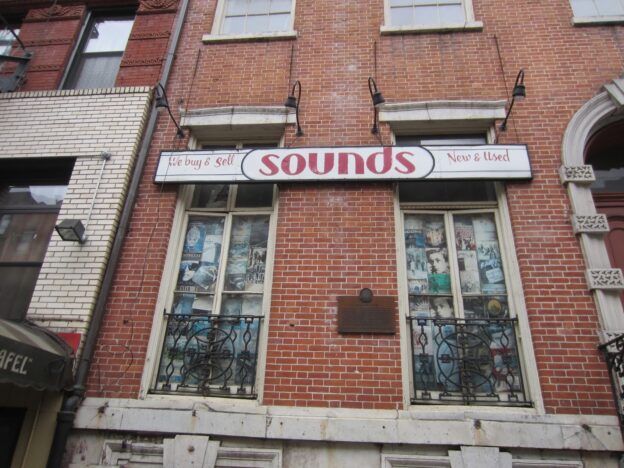
Weeks later we met at the Grassroots, a dive bar on St. Mark’s Place. Outside the door a crack head tried to sell me an 8-track player and some tapes. Inside, the joint was nothing fancy, which was why I liked it. During those years, I spent a lot of time on St. Mark’s because of Dojo’s Restaurant, the bookstore, the cheap record shop Sounds, and St. Mark’s Comics.
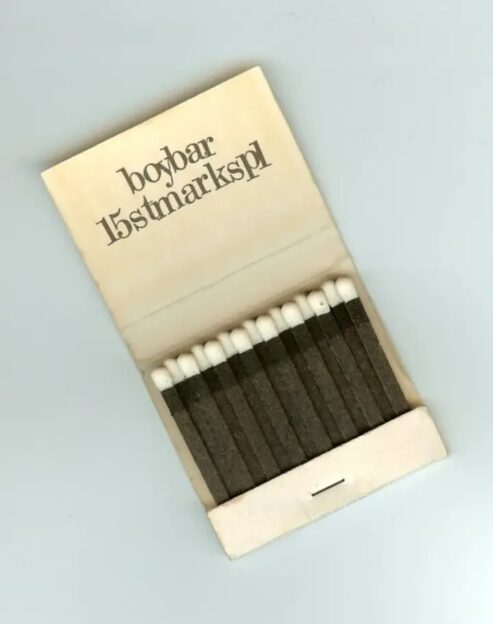
Not long after, Krystal got a night job at a gay club across the street called Boy Bar, while still working at NYU. Some nights she served cocktails and other evenings she was stationed in the coat check room. Always generous with her drink tickets, I went there some nights to hang-out with her and see the drag fashion shows. When I was a kid my mom had a lot of gay friends, so I was never bothered or uncomfortable by the guys and had a wonderful time.
After some drama a few months later, however, Krystal decided to take another night job. “I’m going to become a dominatrix,” she told me.
“Are you serious?”
“I am. I met a woman who runs a dungeon and she’s going to train me.”
“Get out of here. So is beating on guys going to be your revenge against men?”
“Why is everything a joke with you?”
“I’m sorry. If that’s what you want, then it’s cool. Just don’t slap me.”
***
One day Krystal called me and was very excited about a cheap bar she had discovered in her neighborhood. “You have to go there with me.” We made plans to go over the weekend. On the appointed day I picked her up. The bar was a few blocks away. Inside, there was only the bartender and a guy in wife-beater and jeans sitting at the bar. I ordered two vodka tonics, but the bartender replied in a thick Irish accent, “I can’t serve you; you’re drunk. You gotta leave.”
“What are you talking about? I haven’t had a drink all day.”
That was when the guy at the bar turned around and said, “If I were you, I would just listen to the man.” Feeling as though I might get slashed with a razor blade at any moment, I stepped. Krystal was confused. “They were so cool when I was in there before.”
Later, when I told my friend Jerry Rodriguez what happened he got a very serious expression on his face. “I think you went into a Westies bar.” Puzzled, I asked, “Who the hell are The Westies?” Jerry chuckled. “Man, they’re a bad Irish gang out of Hell’s Kitchen. You’re lucky they just asked you to leave. Those guys are crazy.” In 1990 author T.J. English published a book about the thugs that was recently reprinted.
After that close call, the only bar I went to in that neighborhood was the Film Center Café, where in 1989, after being stood-up by Krystal, I picked-up a drug dealer’s girlfriend after I wrote her a poem. Obviously, I made a few mistakes in that neighborhood.
***
In 1991 I met music publicist Lesley Pitts, the woman that would prove to be the love of my life. The same year my first book Bring the Noise: A Guide to Rap Music and Hip-Hop Culture (co-written with Havelock Nelson) was published and my journalism career began to take off. Though Krystal and I remained friendly, we saw one another less. In early-1994 she moved to Los Angeles.
As a writer-at-large at Vibe magazine, I was sent to L.A. frequently and in 1996 I was there to interview singer Toni Braxton. Krystal agreed to pick me up at my hotel. I was happy to be seeing her, yet from the moment she walked through the door it was as though there was a dark cloud over her head.
“Are you all right?”
“Yeah, I just have a lot on my mind. My father has been doing some shady shit back home that has me worried.”
“Like what?”
“It’s too much to get into right now.”
“OK,” I replied.
Minutes later the Montrose Hotel valet pulled the car around and we were off into the night. We went to a nice, low key Mexican place for dinner. The lights were dim, the drinks were strong and music played quietly in the background. Back in 1986, Krystal had introduced me to her former college friend Iris, who I had a three-year relationship with. “Do you ever see her?” Krystal asked.
“God no. That didn’t end well at all.”
“What happened?”
“What didn’t happen? First she started stalking me, then she started calling me demanding I return some books her mother gave me and, the final straw, she started a fight with me at the Stop the Violence party.”
“Stop the Violence party?”
“Yeah. Remember a posse track called ‘Self Destruction’ with KRS-One, MC Lyte, Daddy O and bunch of other rappers. It was about stopping the violence at hip-hop clubs, Black-on-Black, crimes in the hood. Well, that chick started the violence at Stop the Violence.” We both laughed. “She kicked me, slapped me, and snatched a watch she had bought me for Christmas.”
“You never told me any of this.”
“I was embarrassed. Anyway, I met Lesley two years later and it was all good. What about you? Are you dating anyone?”
She glared across the table and rolled her eyes. “No. I don’t know why people are always asking me about dating. It’s not that big of a deal.”
“Sorry I asked.” Our night went downhill from there and within the hour I was back at my hotel.
Back in my hotel room, after pulling out my Discman, I slipped on the headphones and pressed play. Within seconds Brit vocalist Tracy Thorn from Everything But the Girl was singing songs of unrequited love, broken hearts and memories that refused to fade. Walking Wounded was my favorite CD of that month and one whose title I thought applied to Krystal.
That night would be the last time I saw Krystal, though we continued to talk on the phone. Admittedly, there were times when I was busy and told her, “I’ll call you back,” but never did. The last call from her came on August 3, 1999. “If you don’t call me back for real, I’ll never talk to you again.”
“I swear, I’ll call.”
“I have a new number, write it down.” Jotting the digits on a piece of scrap paper, I tossed it on the counter.” However, in a bizarre twist that still haunts me decades later, that same day my girlfriend Lesley suddenly got sick and, hours later, died from a brain aneurysm at St. Vincent’s Hospital. Needless to say, I didn’t call Krystal that night. In the chaos of the next few weeks her phone number was lost. True to her word, she never called again.
***
Harlem born and raised scribe Michael A. Gonzales writes about neo-noir culture for CrimeReads, NYC memories for Oldster and out-of-print African-American novels for various outlets.
You’re such a cinematic writer! I loved this heartwarming, heart shattering story.
So good Michael. Leslie was also so nice. Love reading your stuff, you are a great writer my old friend. Be well!
Great remembrance of time long gone and person remembered. Great work!
I moved to NYC in 1985 from Detroit’s east side to work at Essence Magazine in the Art Department; I am disappointed that I did not know or have the opportunity to meet Krystal. I hope she is able to read this and reach out. What a beautiful photo.